A Phylum Website by Sean Beckman
Phylum Characteristics
Organisms in this phylum are notable for being the first example of deuterostome development, where the anus develops in embryos before the mouth. Organisms in this phylum also have a unique water vascular system that allows seawater to flow through their bodies. Water enters this system through the madreportite, an opening on the skin. Its position differs in each type of echinoderm.
Class: Asteroidea
Commonly called sea stars or starfish, class Asteroidea is defined by their five distinct arms radiating from a central disc. They have open ambulacral grooves, and the madreportite is found on the aboral side, opposite of the mouth.
Class: Echinodea
Organisms in class Echinodea are commonly called sea urchins. Their skin is bristling with rows of spines for protection. They also have a unique organ called an Aristotle’s Lantern, which they use for feeding. Their ambulacral grooves are closed, and their madreportite is located on the aboral side.
Class: Crinodea
Organisms in class Crinodea are commonly called sea lilies and break many of the trends seen in other examples of Echinodermata. For example, these organisms have no madreportite at all. They are also completely sessile, or immobile, and use their long arms to filter food out of the water flowing past.
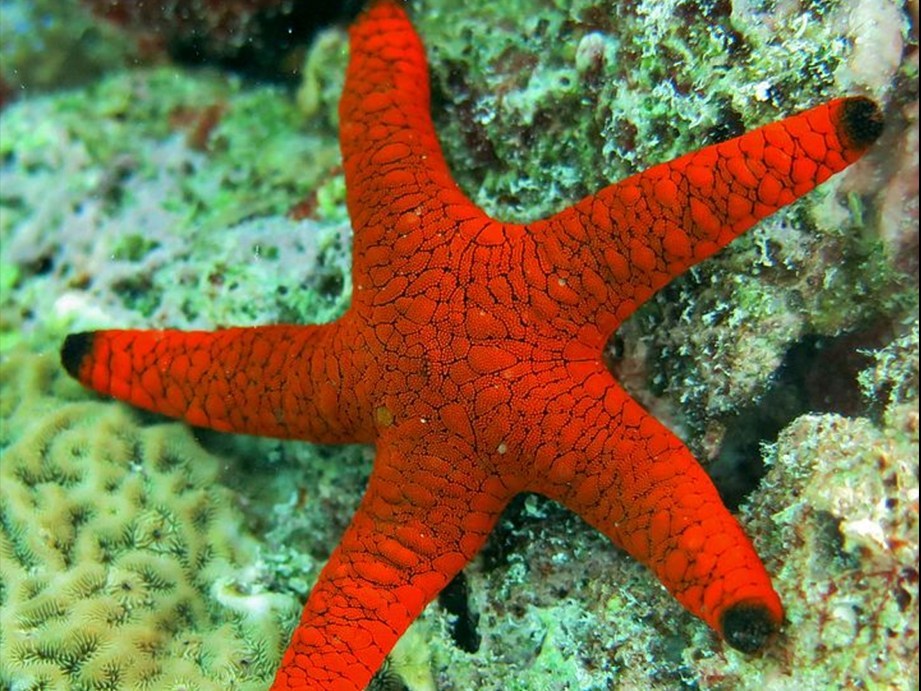
Class Asteroidea 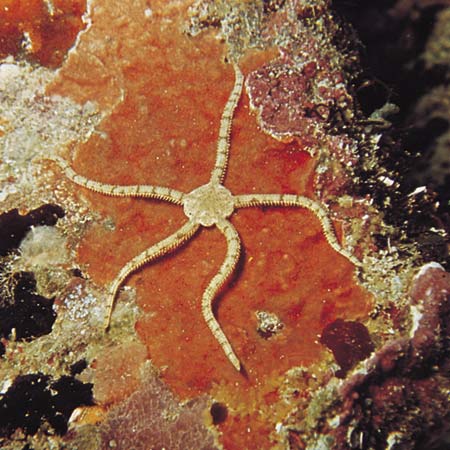
Class Ophiuroidea- brittle stars 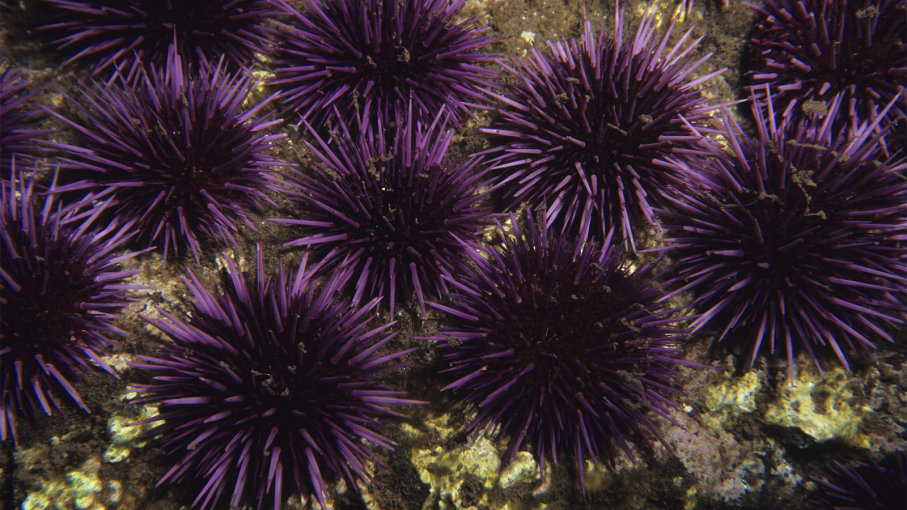
Class Echinodea 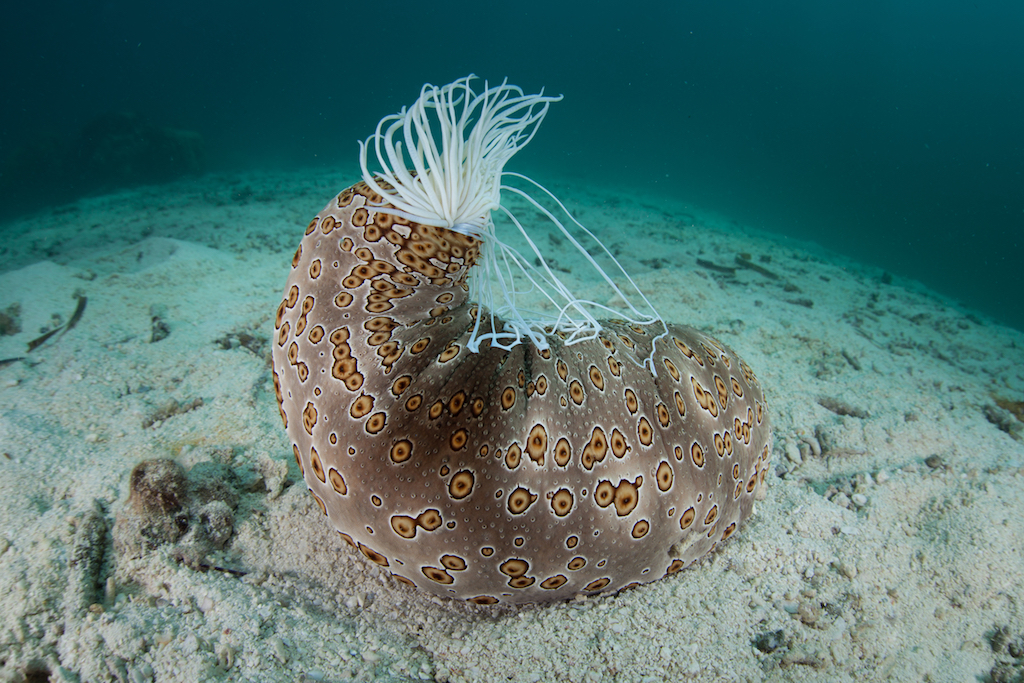
Class Holothuroidea- sea cucumbers 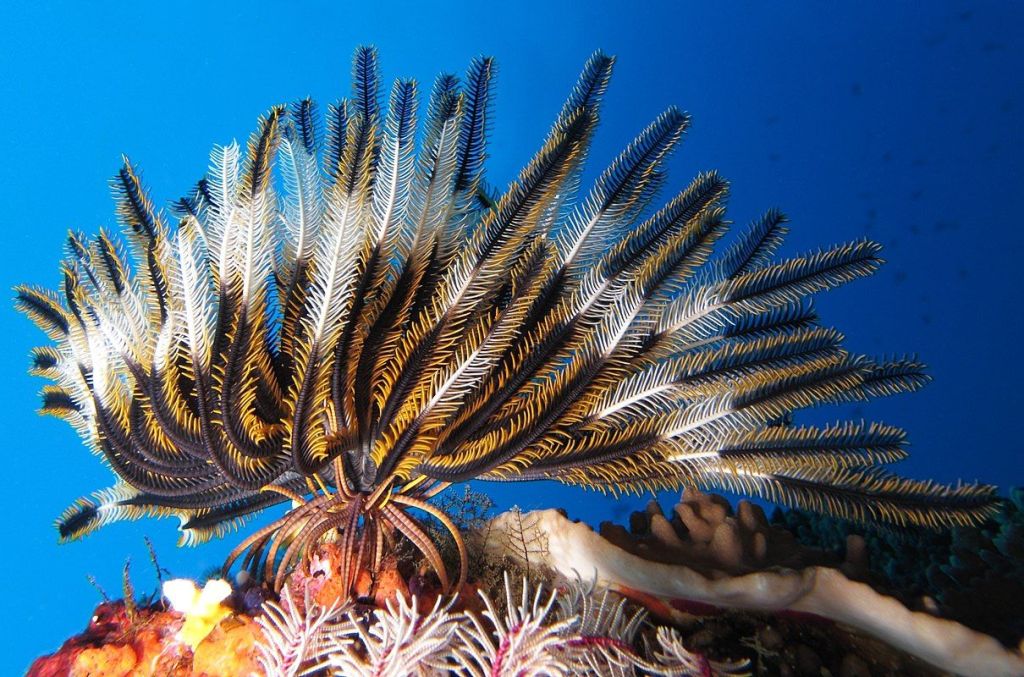
Class Crinoidea
 Phylum Echinodermata